



Month: September 2026
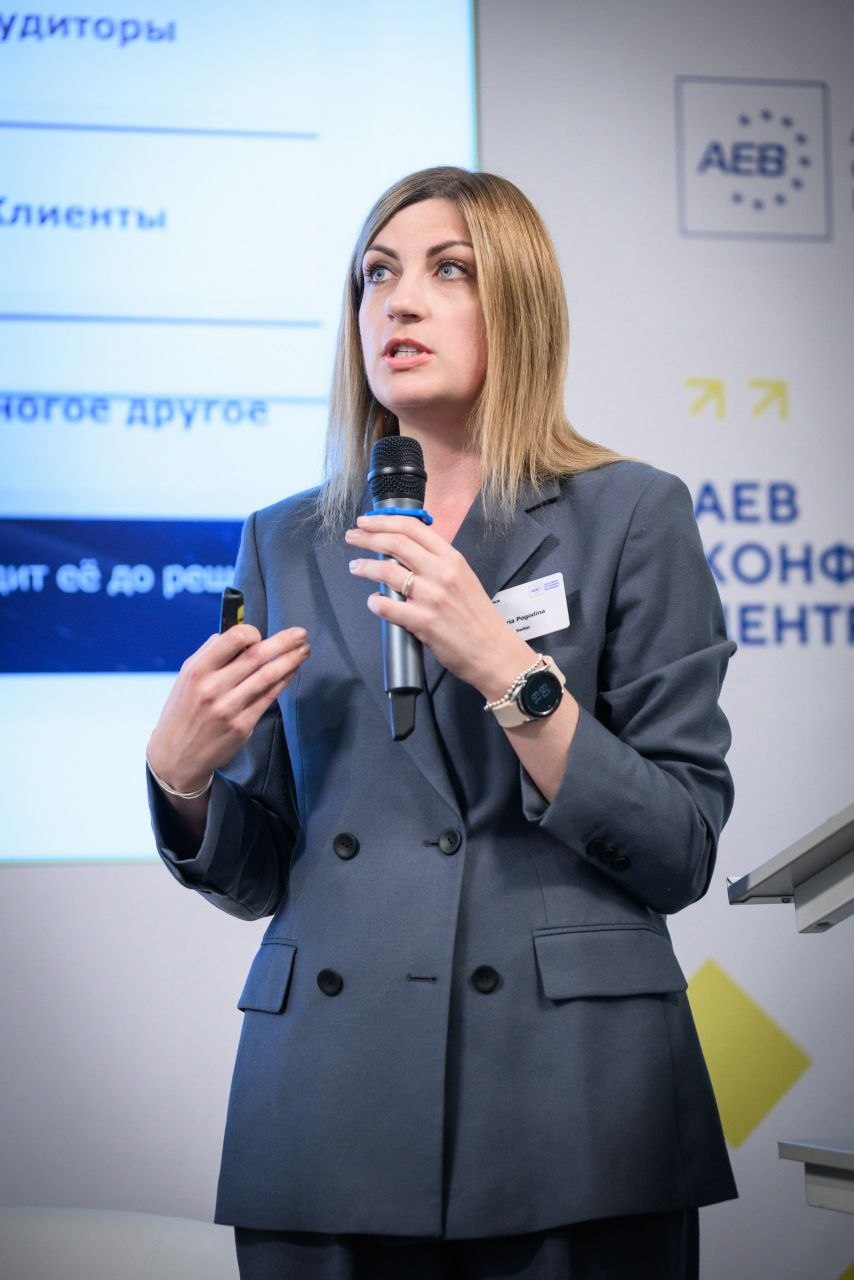
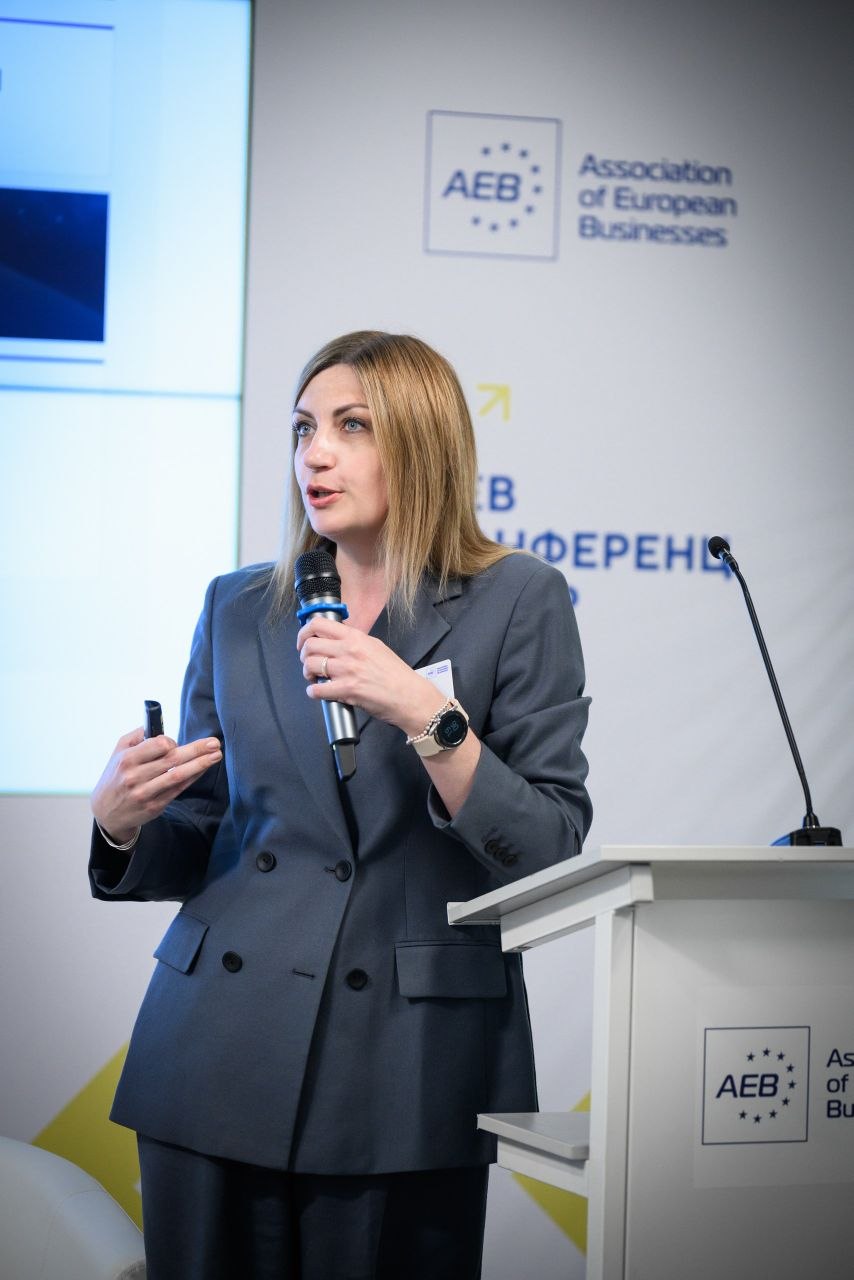
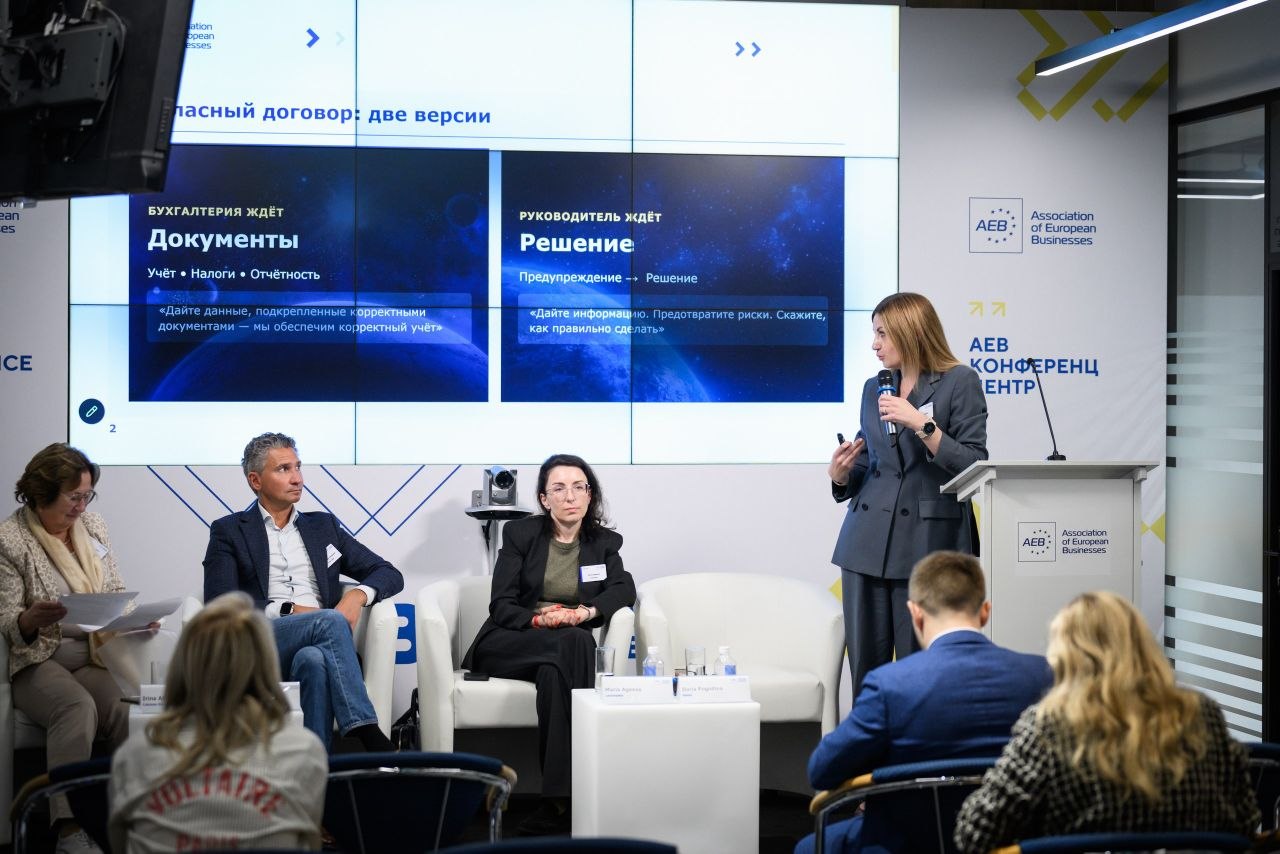
Daria Pogodina Spoke at the Association of European Businesses Conference
“Accounting is waiting for documents, while management is waiting for solutions”: last Tuesday, Daria Pogodina, General Director of SWILAR LLC and Managing Partner of the Swilar Group, spoke at the “People” session during a conference held by the Association of European Businesses. Her presentation was titled “The Evolution of Management’s Expectations for the Accounting Function: An Overview of 2026.”
The presentation addressed the transformation of the finance function and changes in management’s expectations of accounting departments in 2026. Daria shared company case studies and Swilar’s perspective on the current situation.

Other news

06.10.2026
Legislative and Enforcement Practice Digest: September 2026
September 2026 developments in payments, banking, supplies, taxation, corporate law and employment. Adopted and expected changes and upcoming business deadlines.

06.10.2026
Federal Notarial Chamber Clarifies a Number of Issues Regarding the Adoption of Decisions by Participants of an LLC

01.09.2026
Company Registration in Russia: Overview of Legal Forms for Foreign Business Presence
A consolidated overview of legal forms available for foreign business presence in Russia, including key registration, tax and reporting requirements relevant for 2026.
Company Registration in Russia: Overview of Legal Forms for Foreign Business Presence
Dear colleagues,
for those considering entering the Russian market and currently analyzing the most suitable presence structure and developing their strategy, we have prepared a comprehensive overview of the organizational and legal forms available for foreign business presence in Russia.
Choosing the right structure is a strategic decision that determines the permissible scope of activities, tax burden, extent of parent company liability, management framework, and access to banking services.
In this article, we have compiled a brief overview of the available legal forms of presence in the Russian Federation, as well as key registration, tax, and reporting requirements relevant for 2026.
Our overview is structured to guide you from a general description of the forms to specific procedures, taxes, and practical recommendations.
We hope that our material will be useful and assist you in making decisions that are relevant to your specific business.
Basic Forms of Foreign Business Presence in the Russian Federation: Brief Overview
Russian law identifies several most common forms of legal business presence in the Russian Federation that are available to founders from foreign countries.
Each option has its own characteristics, legal nature, and degree of liability that may extend to the foreign owner.
1. Limited Liability Company (LLC / rus. OOO)
This is an independent legal entity – a resident of the Russian Federation, established under Russian law.
A foreign company may act as a participant (founder) and hold 100% of the share without restrictions.
Until 2026, there was a restriction on the so-called “matryoshka” structure. This term is used in Russia to describe a chain of ownership where legal entities hold 100% participation in each other (Company A holds 100% of Company B, which holds 100% of Company C). In 2026, this restriction was officially lifted, and such ownership structures are now permissible in the Russian Federation.
The number of LLC participants may reach up to 50 individuals or legal entities.
Mixed ownership structures are permitted: for example, part of the shares may belong to individuals (Russian or foreign), and part to legal entities.
LLCs may conduct almost any type of activity (manufacturing, trade, services). Certain types require licenses (f.e. banking, insurance, medical, educational) or special permits.
Liability is limited: the LLC is liable for its obligations with its own assets; participants risk only to the extent of their contributions.
2. Joint-Stock Company (JSC / rus. AO)
This is an independent legal entity – a resident of the Russian Federation, established under Russian law.
Unlike an LLC, a JSC is a legal entity with share capital divided into shares. There are public (PJSC / rus. PAO) and non-public (NJSC / rus. NAO) joint-stock companies.
If at the time of establishment the JSC has more than one shareholder, the list of shareholders will be closed to public access, meaning it will not be visible in public sources.
In terms of day-to-day operations, the structure compared to an LLC is generally more suitable for large-scale projects and attracting external capital. This is due, among other reasons, to the fact that the JSC structure imposes enhanced requirements for disclosure, submission of additional reports, and corporate governance.
Since this form of presence is relatively rarely chosen by foreign founders for market entry, we will not discuss it in further detail.
3. Branch of a Foreign Company
A branch is a separate subdivision that is not an independent legal entity and operates on behalf of the parent company.
A branch may, with certain limitations (for example, when importing products), conduct commercial activities (enter into contracts, receive revenue).
However, since the branch is not an independent legal entity, the parent company bears full liability for the branch’s obligations.
4. Representative Office of a Foreign Company
Like a branch, a representative office is a separate subdivision, not an independent legal entity.
However, unlike a branch, the activities of a representative office are limited to representative, not commercial, functions. This implies representing interests, marketing, advertising, conducting negotiations, finding partners, etc. A representative office cannot receive revenue on its own behalf, conduct production, or provide paid services.
Since the representative office is not an independent legal entity, the parent company bears full liability for its obligations.
The head office may directly finance the activities of the representative office without any additional contractual arrangements.
Key Details and Requisites of a Legal Entity in the Russian Federation
After completing registration (or accreditation), the organization receives a set of mandatory identification details (in addition to bank details), which are used in all legal relationships – from contracts with counterparties to banking services and tax reporting.
1) Company Name
The procedure for naming a company in the Russian Federation requires mandatory indication of the legal form in the corporate name – for example, the full name “Общество с ограниченной ответственностью «Трейдинг Интернейшенл»” (Limited Liability Company “Trading International”), abbreviated as “ООО «Трейдинг Интернейшенл»” (LLC “Trading International”).
The name must contain not just a designation of the type of activity (e.g., LLC “Hairdressing Salon”) but also a unique part that distinguishes the organization from others.
Registration is permitted for the full and abbreviated name in Russian, as well as versions in a foreign language (these are also included in the constituent documents).
When choosing a name, several restrictions must be considered:
- It may not include names of states, government bodies, or public associations;
- Words that contradict public interests and morality;
- Use of the words “Russia,” “Russian Federation,” and derivatives thereof is only possible with special permission;
- Additionally, the name must not be identical or confusingly similar to the name of another organization engaged in similar activities – to minimize risks, it is advisable to check variants in the Unified State Register of Legal Entities (USRLE / rus. EGRUL) and the Rospatent trademark database.
The full and abbreviated company name in Russian and (if applicable) foreign languages must be indicated in the constituent documents.
2) Legal Address (Place of Registration)
A legal address is the officially registered location of the organization.
A legal address is mandatory for the existence of any legal form of presence in the Russian Federation and serves several key functions:
- It is the official location for receiving legally significant correspondence (court summons, tax authority demands, government body decisions);
- It determines the jurisdiction of the tax authority where the company is registered;
- It is indicated in all official documents, contracts, invoices, and bank details.
As a general rule, the basic requirement is also that the actual location address coincide with the formal registration address (legal address), and if the company changes location even within the same locality, re-registration (change) of the legal address is required.
In recent years, formal requirements for the address structure have been tightened – it must strictly correspond to the data of the State Address Register (rus. GAR).
For an address to be registered as a legal address, a simple lease agreement is not sufficient. The expressed consent of the property owner or primary tenant is also required to provide the address as the legal address for a specific organization.
3) Company Management
The Sole Executive Body (SEB / rus. EIO) is the person (or several persons) that acts on behalf of the legal entity without a power of attorney.
The SEB has full authority to make decisions on the management of the legal entity and bears personal liability for possible violations of legislation.
At the same time, there is a legally defined list of actions and decisions that remain within the purview of the participant (or the meeting of founders, if there are several) – in the case of an LLC, or the head office – in the case of a branch/representative office.
The scope of authority of the SEB is determined by the LLC’s charter and/or its employment contract, or by the content of the power of attorney issued by the head office to the head of the branch/representative office.
In LLCs and JSCs, the SEB is most often called the General Director (other variants are also possible if provided for by the charter). The SEB is appointed by a decision of the participants (shareholders) or the board of directors and is subject to mandatory inclusion in the open Unified State Register of Legal Entities (USRLE / rus. ERGUL).
A distinctive feature of an LLC is the possibility of appointing several General Directors, who may act jointly or independently of each other depending on the provisions of the charter. Information about all directors is subject to inclusion in the USRLE. Under current Russian legislation, the function of the SEB in an LLC may be performed by either an individual or a legal entity (management company).
For branches and representative offices, the management function is performed by the head of the branch/representative office, who is appointed by the parent company and acts on the basis of a power of attorney. Information about the head is also reflected in open registers.
4) Registration Data and Requisites
Primary State Registration Number (rus. OGRN) – is a numeric code assigned by the Federal Tax Service (FTS / rus. FNS) to a legal entity at the moment of its registration and entry of information about it into the Unified State Register of Legal Entities (USRLE).
OGRN consists of 13 digits and contains information about the year of registration, territorial affiliation, and the serial number of the entry. It is indicated in all constituent documents, in the extract from the USRLE, as well as in contracts, invoices, and reports.
OGRN is unique for each legal entity and cannot be changed (except in cases of reorganization).
Taxpayer Identification Number (rus. INN) – is a numeric code assigned to an organization upon tax registration. For legal entities, the INN consists of 10 digits (the first 4 are the tax authority code, the next 5 are the serial number, and the last is a check digit). The INN is used to identify the taxpayer in all tax legal relationships: when submitting declarations, paying taxes, receiving demands from the FTS, as well as in banking operations.
Branches and representative offices also receive their own INN, different from the parent company’s INN, since they are independent taxpayers (in respect of taxes paid on income received through these subdivisions, as well as taxes on employee wages).
Tax Registration Reason Code (rus. KPP) – is an additional numeric code (9 digits) assigned to the organization simultaneously with the INN upon tax registration.
Unlike the INN, the KPP is not unique to the organization as a whole – different companies may have the same KPP if they are registered with the same tax inspectorate and for the same reason. Therefore, the KPP is always used in conjunction with the INN.
The KPP may change when the location changes, when separate subdivisions are opened, when the taxpayer status changes, etc.
Russian Classification of Economic Activities (rus. OKVED) – is a numeric code for the types of activities of the company. As a rule, a company has one primary OKVED code and several secondary ones.
OKVED codes serve several key functions:
- They identify the primary and additional lines of business of the company;
- They are used by government bodies for statistical accounting;
- They are considered by banks when opening accounts and evaluating a client’s business profile;
- They affect the possibility of applying certain tax regimes and benefits.
Upon registration of a legal entity in the united state register (USRLE), the declarative OKVED codes (primary and additional) selected by the founders are entered.
Starting from 2026, the USRLE also includes reporting codes determined by Rosstat on the basis of data on the organization’s actual activities (based on regular statistical reports, which most companies are required to submit).
These requisites together form the legal and tax identity of the organization in the Russian Federation. Their correct indication in all documents and timely updating upon changes (change of address, management, types of activities) is a mandatory condition for the smooth operation of the company and interaction with counterparties and government bodies.
5) USRLE – Unified State Register of Legal Entities (rus. ERGUL)
The USRLE contains information about all officially registered legal entities in the Russian Federation.
An extract from the USRLE for a specific legal entity is public information and can be downloaded directly from the tax authority’s website without restrictions.
The publicly available extract from the USRLE displays all key data of the legal entity:
- Name;
- Legal address;
- Registration numbers (OGRN, INN, KPP, OKVED codes);
- Amount of authorized capital;
- Information about company management (full name, INN);
- Information about founders (individuals and legal entities) and the size of their shares;
- History of changes (change of management or legal address, ownership structure, etc.)
Registration Procedure for Each Form and Key Features
All listed legal forms of presence require state registration (or accreditation), tax registration, and opening of bank accounts.
Below are the key stages and requirements for each form, taking into account current legal requirements.
1. Registration of a Limited Liability Company (LLC)
The registering authority for an LLC is the tax inspectorate. The registration period is several working days from the date of document submission.
The minimum authorized capital for an LLC is 10,000 RUB (the upper limit is not restricted). The authorized capital must be paid no later than 4 months from the date of registration.
A legal address is required already at the company registration stage. The address must be confirmed by a lease agreement and/or a guarantee letter from the owner. It is important that the address is indicated in strict accordance with the data of the State Address Register (rus. GAR). Even a formally existing address may be deemed incorrect if it does not match the register data.
The use of “mass” addresses (objects with registration of more than 10–15 companies without real connection) is grounds for refusal of registration or entry of a record of unreliability of data in the USRLE.
The types of activities of the LLC are also indicated at the registration stage – the intended OKVED codes (primary and additional) must be submitted declaratively in the registration documents.
Approximate package of documents for registration if the participant is a foreign legal entity (with apostille and notarized translation into Russian):
- Application form;
- Decision of the foreign founder (or minutes of the meeting, if there are several participants) on the establishment of the LLC (indicating the size of the share, nominal value, payment procedure);
- LLC Charter;
- Notarized extract from the trade register of the country of incorporation (validity period – no more than 2 months);
- Copies of constituent documents of the foreign company (charter, certificate of registration);
- Document confirming the legal address (guarantee letter or lease agreement).
This list is not exhaustive and is provided for orientation purposes only. The final list of documents may vary depending on the country of incorporation of the foreign participant, individual requirements of the registering authority in a particular region, or other factors.
Personal presence of the founder: generally not required. Registration can be carried out remotely through a representative by notarized power of attorney (with apostille and translation).
The highest governing body of the LLC is the participant (or the meeting of participants, if there are several). Some functions may be delegated to the Board of Directors (this must be specified in the Charter).
However, generally, for all commercial, administrative, and other operational matters on the ground, decisions are fully made by the appointed SEB. Their authority may be limited by the charter or employment contract, but this requires individual configuration.
The Sole Executive Body (SEB) – General Director – is appointed by decision of the participant (or by minutes of the general meeting of participants).
The function of the SEB may be performed by either an individual or a legal entity (management company).
If the SEB is an individual, the director may be either a Russian citizen or a foreign national. A foreign director requires a legal right to work in the Russian Federation (residence permit, work permit, or other). More detailed information on current immigration requirements can be found in our review at the link.
Under current rules, the charter may provide for the appointment of two or more General Directors. Three management models are possible:
- Independent (parallel) – each director acts independently.
- Joint (two-key principle) – all directors act only jointly (all signatures are required).
- Division of competencies – the charter specifies the areas of responsibility of each director.
Information about all directors is subject to inclusion in the USRLE.
Banking service features: when opening a current account, the bank conducts an in-depth verification of beneficiaries and requests a certificate of beneficial ownership with the full chain of ownership down to individuals. Subsequently, the bank requests updated information on ultimate beneficiaries annually (see more details in our review at the link).
2. Accreditation of a Branch
Since 2021, the accreditation authority is the Federal Tax Service of Russia.
The accreditation period for branches is unlimited (perpetual). However, if activity is not carried out for 12 months, the tax authority may exclude the branch from the register.
A branch must have a legal address for its place of business; the requirements for structure and confirmation are the same as for an LLC.
Approximate package of documents for registration if the participant is a foreign legal entity (with apostille and notarized translation into Russian):
- Application for accreditation;
- Regulations on the branch in Russian (indicating the types of activities);
- Extract from the trade register of the country of registration (validity period no more than 2 months);
- Constituent documents of the parent company;
- Decision on the establishment of the branch and appointment of its head;
- Document confirming payment of the state fee;
- Information about beneficial owners.
This list is not exhaustive and is provided for orientation purposes only. The final list of documents may vary depending on the country of incorporation of the foreign participant, individual requirements of the registering authority in a particular region, or other factors.
The head of the branch is appointed by the parent company and acts on the basis of a power of attorney and the Branch Regulations. The head may be a foreign citizen, but it is important to consider the requirements of immigration legislation (depending on the head’s country of citizenship, a work permit, patent, or other may be required).
The branch is required to open a bank account. The parent company has the right to transfer funds to the branch without restrictions. However, for branches from “unfriendly” states, there are restrictions on reverse transfers abroad.
3. Accreditation of a Representative Office
The procedure is generally similar to that for a branch. An important difference: the Regulations on the Representative Office must clearly state that it does not conduct commercial activities (only representative and auxiliary functions).
General Information on the Russian Tax System and Financial Structure
1. Financial Year and Main Tax Regimes
The financial year in the Russian Federation corresponds to the calendar year and runs from January 1 to December 31.
Organizations may apply:
General Taxation System (GTS / rus. OSN) – the main regime, available to everyone. It involves payment of corporate profit tax, VAT, property tax, and other taxes.
Simplified Taxation System (STS / rus. USN) – a special regime for small and medium-sized businesses (2026 income limits up to 490.5 million RUB/year and up to 130 employees).
The STS is available for LLCs and JSCs (with limitations), but is not available for branches and representative offices.
Organizations on the STS do not pay corporate profit tax. Instead, they have 2 regimes available:
- STS Income: 6% of total income is paid to the budget;
- STS Income minus Expenses: 15% of the difference between income and expenses is paid to the budget.
Organizations on the STS with income up to 20 million RUB per year (as of 2026) are exempt from VAT, but are required to start paying VAT when the threshold is exceeded.
2. Key Tax Rates in 2026
| Tax | Rate | Comment |
|---|---|---|
| VAT | 22% | Increased from 20% effective January 1, 2026. Preferential rates apply: 10% (socially significant goods), 0% (exports), as well as 5%/7% for organizations with income from 20 to 250 million RUB. Calculated rate – 22/122. |
| Corporate Profit Tax | 25% | Increased from 20% since 2025. Distribution: 8% – federal budget, 17% – regional (until 2030). Regions may reduce the rate for certain categories. |
| Personal Income Tax (PIT / NDFL) | 13%-22% | Progressive scale applies. The tax rate depends on the total annual income: • 13% – for income up to 2.4 million RUB/year (inclusive). • 15% – for income from 2.4 million to 5 million RUB/year. • 18% – for income from 5 million to 20 million RUB/year. • 20% – for income from 20 million to 50 million RUB/year. • 22% – for income over 50 million RUB/year. |
| Insurance Contributions | 30% | Includes pension, medical, social, and other mandatory contributions. The amount is calculated from the payroll fund. Insurance contributions are paid by the employer and calculated on the employee’s gross salary. Reduced rates apply for certain categories of companies. |
| STS “Income” | 6% | Paid instead of corporate profit tax. |
| STS “Income minus Expenses” | 15% | Same as above. |
| Withholding Tax on Dividends | 15% | Rate may vary depending on the terms of the applicable Double Taxation Treaty (DTT). Applies to payments to foreign participants. For “unfriendly” jurisdictions – additional restrictions (Type “C” accounts, 10 million RUB monthly limit). |
3. Accounting and Tax Reporting
Annual accounting statements under RAS (Russian Accounting Standards / rus. RSBU) are prepared for the calendar year (January 1 – December 31).
Deadline for submission to the tax authority: no later than March 31 of the following year (3 months after the end of the year).
Since 2020, reports are submitted only in electronic form through EDI (Electronic Document Interchange) operators.
During the year, tax reporting is prepared quarterly (for the general taxation system). Key deadlines: VAT and corporate profit tax declarations are filed quarterly; certain types of reports on payroll and related taxes and contributions are submitted monthly.
Disclosure of beneficiaries: in accordance with Federal Law No. 115-FZ, at least once a year, and also upon each change, the company is required to provide the bank with a certificate of beneficial ownership.
Frequently Asked Questions (FAQ)
Question 1: Which form is most optimal for a foreign investor starting a business from scratch?
Answer: The legal form of presence should be selected individually depending on the specific business objectives in the Russian Federation. Trading or manufacturing companies in most cases choose the LLC form, as it provides full freedom of commercial activity, minimum capital (10,000 RUB), and ensures risk separation between the subsidiary and the founder. However, in some cases, a branch or representative office may be a more advantageous option (for example, due to the simplicity of direct financing from the head office). Therefore, there is no single definitive answer.
Question 2: Can a foreign company be the sole founder of an LLC?
Answer: Yes, this is permitted without restrictions.
Question 3: Is personal presence required when registering an LLC with a foreign founder?
Answer: No, personal presence is generally not required. Registration can be carried out remotely through a representative by notarized power of attorney. However, to open a bank account, the bank generally requires the personal presence of the director.
Question 4: Can a foreigner be the General Director of an LLC?
Answer: Yes, there are no restrictions on this. However, it is important to consider the requirements of immigration legislation (depending on the director’s country of citizenship, a work permit, patent, or other may be required). The absence of proper immigration documents creates risks of substantial fines and threats to the company’s operations. A detailed overview of the 2026 immigration changes can be found at the link.
Question 5: What is the validity period of accreditation for a branch or representative office?
Answer: Since 2015, accreditation has been perpetual. However, if activity is not carried out for 12 months, the tax authority may exclude the subdivision from the register.
Question 6: Can an LLC have several General Directors?
Answer: Yes, the Civil Code of the Russian Federation (Article 53) allows the appointment of two or more directors. They may act jointly or independently, depending on the charter. Information about all directors is entered into the USRLE. The SEB of an LLC may also be a legal entity (management company).
Question 7: Are any special licenses or permits required for the company to operate?
Answer: Generally, for most types of activities, no. However, there are certain types of activities that require licensing or separate certification. Therefore, there is no single answer; it all depends on the specifics of the company’s activities.
We would be happy to provide a more detailed consultation on choosing a specific form, preparing a full package of documents, and supporting registration procedures, taking into account the specifics of your industry, the jurisdiction of the parent company, and current legal requirements.
Other news
06.10.2026
Legislative and Enforcement Practice Digest: September 2026
September 2026 developments in payments, banking, supplies, taxation, corporate law and employment. Adopted and expected changes and upcoming business deadlines.
06.10.2026
Federal Notarial Chamber Clarifies a Number of Issues Regarding the Adoption of Decisions by Participants of an LLC

25.08.2026
Banking Services in the Russian Federation: Opening and Maintaining Accounts for Companies with Foreign Participation
A consolidated overview of administrative and regulatory requirements for opening and maintaining bank accounts for legal entities with foreign participation in the Russian Federation.