



Month: June 2026
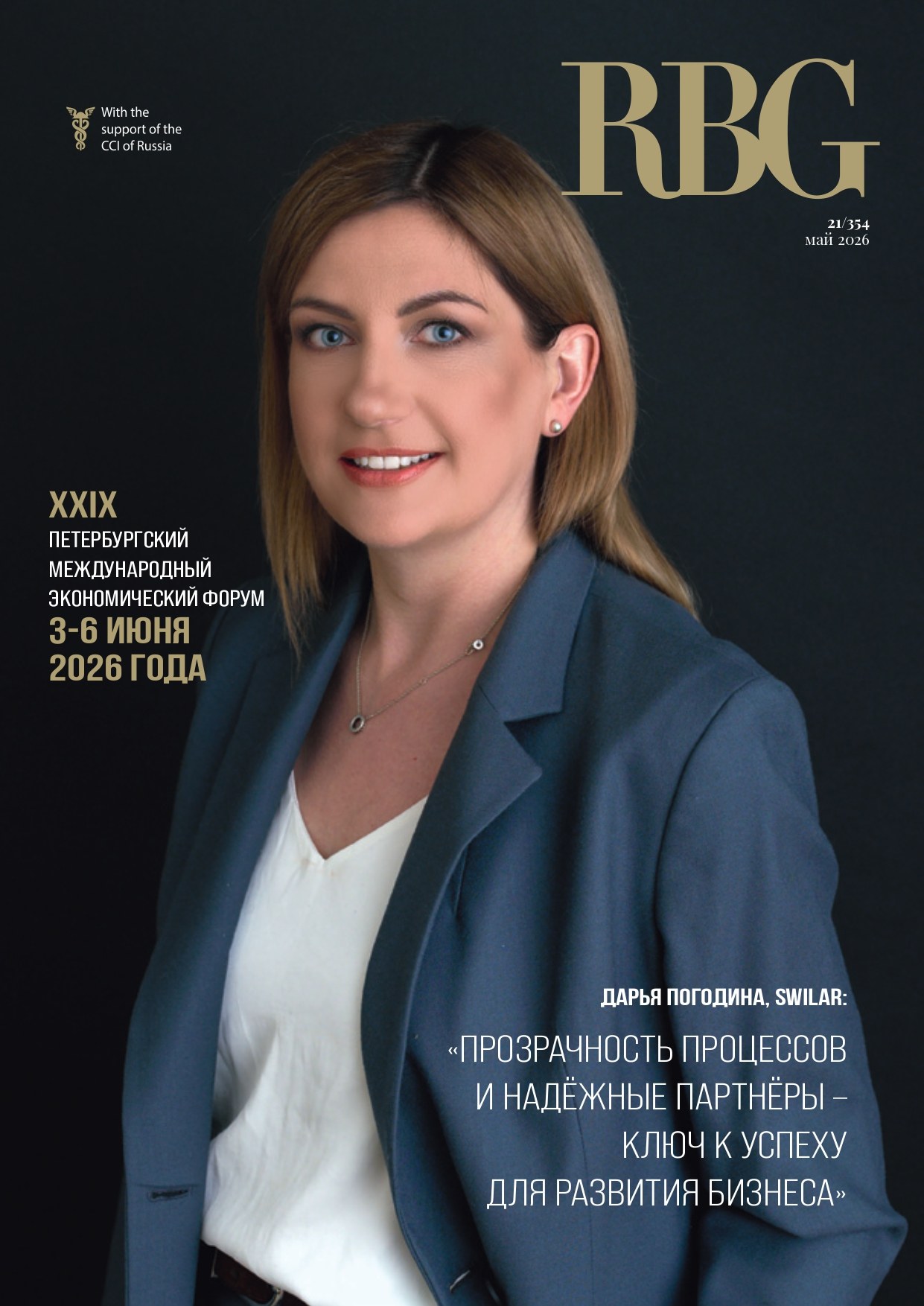
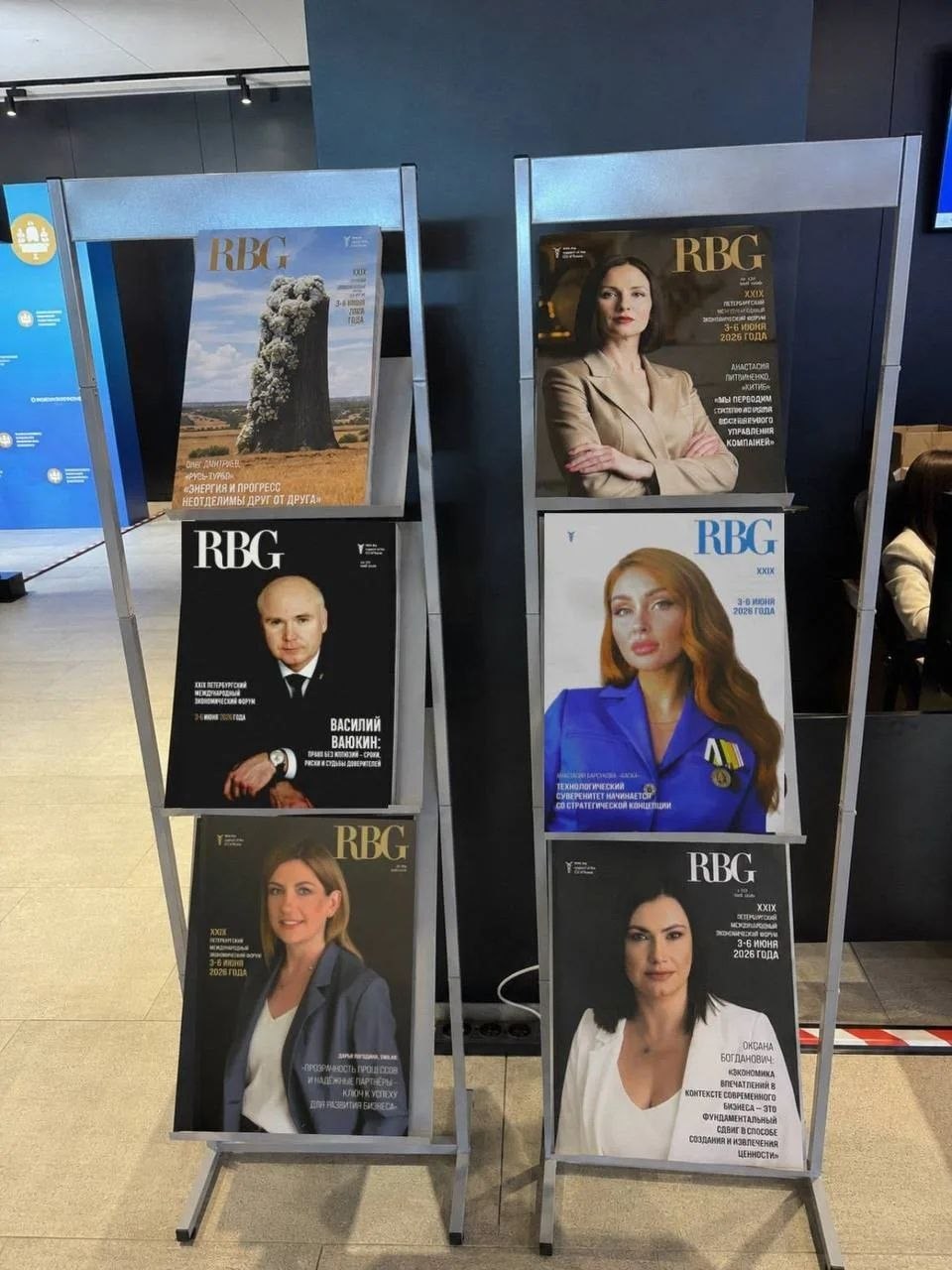
Swilar on the cover of the May issue of Russian Business Guide at the 29th St. Petersburg International Economic Forum
This year, the Swilar Group of Companies celebrates its 15th anniversary. We marked this milestone with an in-depth interview for Russian Business Guide: its May issue was released for the 29th St. Petersburg International Economic Forum. The cover of the issue features Daria Pogodina, Managing Partner of the Swilar Group of Companies.
In the interview, she spoke about the company’s journey and how Swilar has developed into a consulting group over the years. A key feature of our approach is the close integration of legal, accounting, and financial practices. We built a “one-stop shop” model so that clients receive not fragmented advice, but comprehensive and viable solutions.
Special attention was also given to working with the SME segment: its specific characteristics, typical mistakes companies make when entering the Russian market, and service standards that turn a one-time interaction into a long-term partnership.
Read the full interview in the May issue of Russian Business Guide magazine, No. 21/354.
Other news

06.10.2026
Legislative and Enforcement Practice Digest: September 2026
September 2026 developments in payments, banking, supplies, taxation, corporate law and employment. Adopted and expected changes and upcoming business deadlines.

06.10.2026
Federal Notarial Chamber Clarifies a Number of Issues Regarding the Adoption of Decisions by Participants of an LLC

01.09.2026
Company Registration in Russia: Overview of Legal Forms for Foreign Business Presence
A consolidated overview of legal forms available for foreign business presence in Russia, including key registration, tax and reporting requirements relevant for 2026.
New review of the Supreme Court of the Russian Federation No. 8/2026: Risks in settlements and transactions with unfriendly foreign counterparties
Dear Colleagues,
On June 22, 2026, the Supreme Court of the Russian Federation has published important clarifications (Thematic review No. 8/2026 dated June 17, 2026), which significantly refine and change the approach to assessing risks in settlements and transactions with foreign counterparties from countries included in the list of states unfriendly to the Russian Federation.
The document establishes the trend of judicial practice toward recognizing as void any legal structures aimed at circumventing special economic measures.
The document summarizes the approaches of courts to mechanisms such as payment splitting, cession, conclusion of settlement agreements or direct transactions with assets.
Below we provide a brief summary of some conclusions of the Review, however, we highly recommend you to review the full text of the document.
1. Payment splitting: a new direction in judicial practice
The key conclusion of the paragraph 4 of the Review concerns payments to foreign counterparties from unfriendly states.
The Supreme Court of the Russian Federation specified that the formal division of payments ("artificial splitting" according the text of the document) on credit obligations into tranches of up to 10 million rubles with the aim of circumventing the special settlement procedure (Presidential Decree No. 95) constitutes an abuse of rights.
It should be reminded that under the Presidential Decree No. 95 of the Russian Federation dated March 5, 2022, the special procedure (including the mechanism of type "С" accounts) applies when the limit of 10 million rubles per month (or the according equivalent in other currency) is exceeded in respect of obligations to a specific foreign creditor.
Position of the Supreme Court of the Russian Federation: formal compliance with the monthly limit for each individual payment does not provide business immunity from scrutiny.
If the totality of transactions indicates an intention to circumvent the requirements of the Decree No. 95, such actions may be qualified as void on the basis of the Articles 10 and 168 of the Civil Code of the Russian Federation (abuse of rights).
Risk area:
Although the clarification of the Supreme Court of the Russian Federation concerns only loan agreements, it is important to consider that the restrictions initially introduced by the Decree No. 95 and applicable to them were subsequently extended by additional Decrees (with reference to the rules introduced by the Decree No. 95) and effectively also apply to other types of payments in favor of foreign persons (such as dividends, royalties and others).
In this regard, it can be expected that the new position of the court may be relevant not only for the situation described in the Review regarding credit obligations but also for other types of payments, such as:
- Intra-group financing and loans;
- License fees and royalties;
- Payment of dividends to foreign participants;
- Any other periodic transactions to the persons from unfriendly jurisdictions.
The following factors are now critical for risk assessment: the economic purpose of the transaction, the total amount of aggregate obligations, control under payment recipients by unfriendly jurisdictions and interconnection of all payments made.
2. Other significant conclusions summarized in the Review
In addition to the issue of payment splitting, the Supreme Court has summarized its position on several other important matters that shape a comprehensive risk landscape for businesses. Below are given the examples of some conclusions of the Review:
1) Real estate transactions controlled by persons from unfriendly states
Essence: a real estate purchase and sale agreement concluded by a Russian company controlled by a foreign person from an unfriendly jurisdiction (i.e., where such person holds a share of more than 50%) is void if no permission from the Government Commission has been obtained (subclause "a" of the Decree No. 81).
Conclusion: even in the absence of any fact of funds being transferred abroad, the fact of concluding a transaction in circumvention of the permitting procedure itself is qualified as a violation of public interests (clause 2 of the Article 168 of the Civil Code of the Russian Federation) and results in the transaction being recognized void.
2) Establishment of foreign control over strategic assets
Essence: transactions for the acquisition of shares (interests) in strategic enterprises (the Review refers to a port) without prior approval from the Government Commission (in accordance with the Law No. 57-FZ) are void.
Consequences: in addition to bilateral restitution, the recovery of shares in favor of the Russian Federation may be applied as a consequence (Part 11 of the Article 15 of Law No. 57-FZ).
3) Assignment of claims to a friendly state
Essence: the assignment of a claim under a contract whereby a foreign creditor from an unfriendly country assigns the claim to a Russian or other friendly counterparty solely for the purpose of receiving money in circumvention of type "C" or "O" accounts, is void (Articles 10 and 168 of the Civil Code of the Russian Federation).
This applies both to loans (Decree No. 95) and to license fees (Decree No. 322).
4) Settlement agreement
Essence: a settlement agreement that provides for the payment of money (e.g., compensation for intellectual property infringement) not directly to a foreign rights holder from an unfriendly country, but to its Russian representative (or other person) in circumvention of the permitting procedure (in the situation described in the Review – the transfer of funds to a special type "O" account), cannot be approved by the court and is void.
Conclusion: a settlement agreement is considered as a transaction to which the permitting procedure applies on the basis of the current restrictive measures, in accordance with the underlying logic of the situation. Should violations be identified, the agreement may be declared void on the basis of the Articles 10 and 168 of the Civil Code of the Russian Federation.
5) Limitation of liability of banks
Essence: Russian bank that has debited a client's funds and sent them through an intermediary bank in an unfriendly country shall not be liable for the losses of the client if the transfer was blocked by the intermediary due to sanctions imposed at a later date, which the bank did not know and could not have known at the time of the transfer.
Conclusion: the risk of the transfer being blocked by the intermediary bank in an unfriendly country lies with the client, provided that the Russian sending bank proves that it acted in good faith and could not have foreseen the imposition of restrictions.
Conclusions and recommendations
The extracts given above do not summarize all the conclusions covered in the Review. We recommend you to review the full text of the document.
To minimize risks, we recommend companies making settlements with foreign counterparties to pay attention to the following factors:
- Conduct an audit of current obligations to counterparties from unfriendly countries and verify the need to comply with restrictive measures and apply the special settlement procedure;
- Analyze the economic purpose of their transactions and identify any signs of artificial splitting;
- Assess aggregate obligations. When reviewing consider the aggregate volume of obligations to a foreign recipient from an unfriendly state, not only the amount of a single payment order;
- Review the ownership structure of foreign counterparties to identify possible factors of control by persons from unfriendly states;
Our team is ready to conduct a comprehensive analysis of your situation promptly and, if necessary, help to adjust the logic of your settlement arrangements in the light of the latest judicial practice developments.
Contacts:
Maria Matrossowa, Partner, Project Leader: maria.matrossowa@swilar.ru
Daria Pogodina, Partner: daria.pogodina@swilar.ru
Submit a request
Other news
06.10.2026
Legislative and Enforcement Practice Digest: September 2026
September 2026 developments in payments, banking, supplies, taxation, corporate law and employment. Adopted and expected changes and upcoming business deadlines.
06.10.2026
Federal Notarial Chamber Clarifies a Number of Issues Regarding the Adoption of Decisions by Participants of an LLC

28.09.2026
Daria Pogodina Spoke at the Association of European Businesses Conference
Daria Pogodina discussed the transformation of the finance function and management's expectations of accounting departments in 2026.
Law on the State Language 2026: what has changed for business
Dear colleagues,
we would like to draw your attention to the fact that Federal Law No. 168-FZ dated June 24, 2025 “On Amendments to Certain Legislative Acts of the Russian Federation” came into effect on March 1, 2026 (hereinafter referred to as Federal Law No. 168-FZ) and requires businesses to use Russian on all signs, signposts, boards, as well as on websites and in apps.
The state languages of the republics, other languages of the peoples of the Russian Federation and foreign languages may be used additionally, provided that the following conditions are met: identity of content and equivalence of placement and technical design (font, colour, size).
The following may remain untranslated into Russian:
• registered trademarks and service marks. If your logo is a trademark registered with the Russian Federal Service for Intellectual Property, it does not need to be changed. Otherwise, the logo must either be translated into Russian or duplicated in Russian as the primary language, subject to the above conditions;
• company names entered in the Unified State Register of Legal Entities.
Liability for non-compliance with Federal Law No. 168-FZ is provided for in Article 14.8 of the Code of Administrative Offences of the Russian Federation. Violation of the consumer’s right to receive necessary and reliable information about the goods, works, services, manufacturer, seller, contractor and their operating hours entails a warning or an administrative fine:
• for officials – from RUB 500 to RUB 1,000;
• for legal entities – from RUB 5,000 to RUB 10,000.
Compliance with these requirements is monitored by the Federal Service for the Oversight of Consumer Protection and Welfare, local administrations and the prosecutor’s office (based on complaints from citizens).
In this regard, businesses are advised to:
• audit all signs, signposts, websites, apps and other materials;
• register a trademark if it is necessary to retain a name in a foreign language (the process takes about a year);
• prepare duplicate Russian versions in compliance with the formatting rules or replace foreign words with Russian-language versions;
• adjust marketing and advertising processes.
We will be glad to assist you in analyzing your websites for compliance with Federal Law No. 168-FZ for the purpose of their subsequent Russification (if necessary).
Submit a request
Other news
06.10.2026
Legislative and Enforcement Practice Digest: September 2026
September 2026 developments in payments, banking, supplies, taxation, corporate law and employment. Adopted and expected changes and upcoming business deadlines.
06.10.2026
Federal Notarial Chamber Clarifies a Number of Issues Regarding the Adoption of Decisions by Participants of an LLC
28.09.2026
Daria Pogodina Spoke at the Association of European Businesses Conference
Daria Pogodina discussed the transformation of the finance function and management's expectations of accounting departments in 2026.